5 Reasons Gravel Cycling Is the Fastest-Growing Sport in America
Something is happening on the back roads of America. On dusty county roads in Kansas, fire trails in the Sierra foothills, and forest service routes through Oregon's high desert, a new breed of cyclist is emerging — one who's traded smooth pavement for the crunch of gravel and hasn't looked back.
Gravel cycling has exploded from a niche subculture into one of the fastest-growing segments of the entire cycling industry. Strava named it the fastest-growing sport on its platform in 2024, with a 55% increase in global participation. The gravel bike market, valued at $1.68 billion in 2024, is projected to nearly double by 2033. Events that started with a few dozen riders are now drawing thousands. And the riders keep coming.
Here's why.
1. It's the Adventure Cycling Always Promised
Road cycling is beautiful, but it comes with constraints — painted lane lines, traffic, the same routes week after week. Mountain biking is thrilling, but it demands technical skill and expensive equipment. Gravel sits right in the sweet spot, offering the freedom to explore landscapes that road bikes can't reach, without the technical demands of singletrack.
The appeal is elemental: you get on your bike, turn off the main road, and discover what's out there. That county road you've driven past a hundred times? It goes somewhere incredible. The forest service route on the map that disappears into the mountains? It connects to a network of gravel roads that could keep you riding for days. Gravel transforms the map from a collection of highways into an infinite web of possibilities.
For riders coming from road cycling, the transition is revelatory. The same fitness applies, but the experience is completely different — slower, quieter, and immeasurably more interesting. For newcomers to cycling, gravel's lower speeds and softer surfaces make it more approachable than either road or mountain biking. You don't need to hold 20 mph in a paceline or navigate rock gardens. You just need to pedal and look around.
2. The Community Is Built Different
Walk into a road cycling group ride and you'll often find an unspoken hierarchy — the fast group, the slow group, the riders who "belong" and the ones who don't. Gravel culture was built from the ground up to be different. The ethos is simple: ride your own ride.
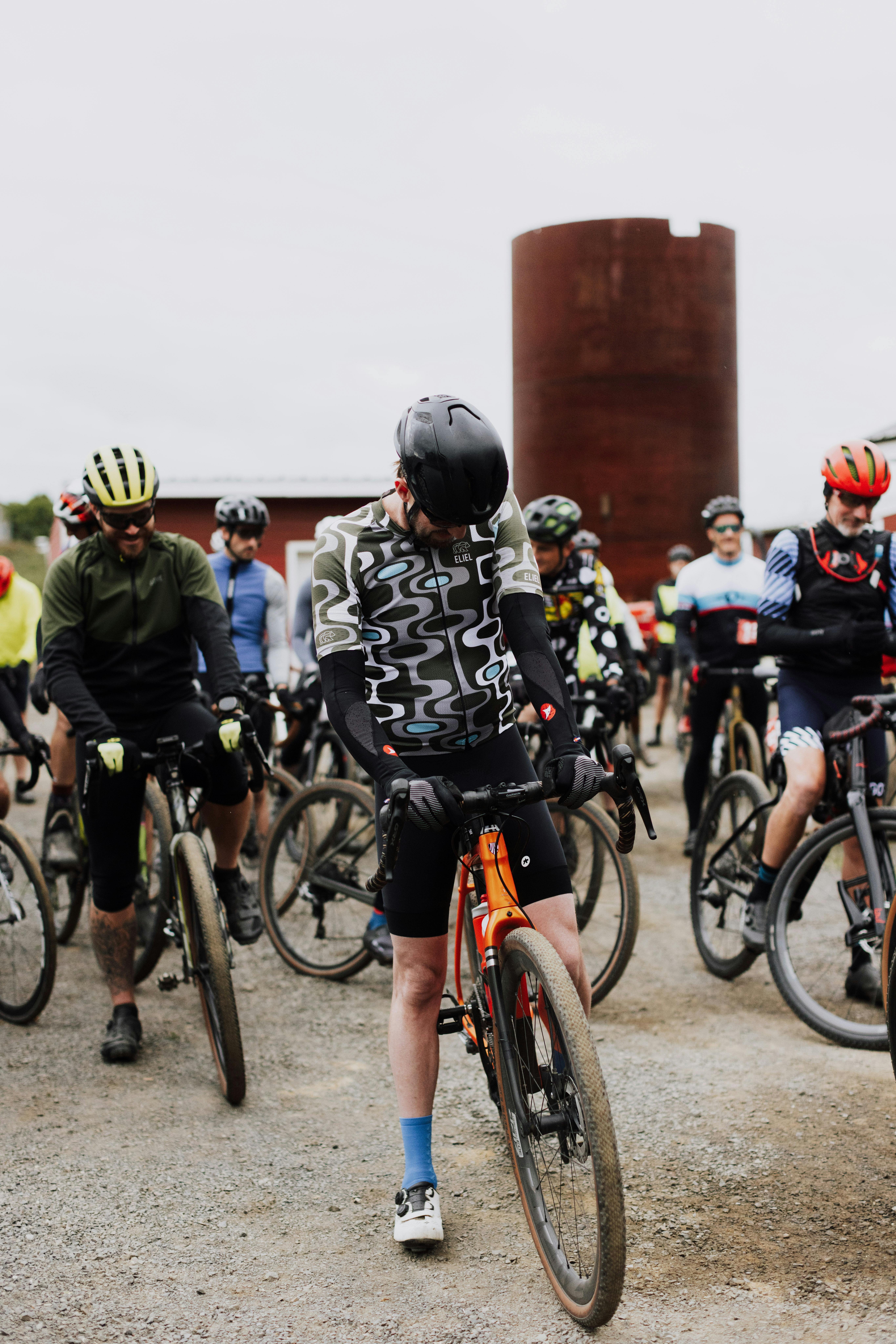
At gravel events, professionals and first-timers line up together. There's no separation by category, no qualifying times, no rigid rules about what you can wear or ride. People show up on carbon superbikes and steel touring rigs with racks still attached. They wear matching team kits and Hawaiian shirts. And nobody cares, because the shared experience of grinding through 50 miles of dust and wind creates a bond that transcends all of it.
This culture of inclusion has been especially powerful for groups historically underrepresented in cycling. Women, riders of color, adaptive athletes, and older riders who've been priced out or intimidated out of road cycling are finding a home in gravel. Events increasingly feature all-access categories, e-bike divisions, and community rides designed for people who've never clipped into a pedal before. The message is consistent: if you can ride, you belong.
3. One Bike to Rule Them All
For years, serious cyclists needed multiple bikes — a road bike for pavement, a mountain bike for trails, maybe a commuter for the daily grind. Gravel bikes collapsed these categories. With geometry that's stable on rough terrain but efficient on pavement, and tire clearance that accommodates everything from slick 35mm rubber to knobby 50mm treads, a gravel bike is the closest thing cycling has produced to a do-everything machine.
The industry has followed the demand with furious innovation. Frame materials range from budget-friendly aluminum to aerospace-grade carbon fiber and titanium. Suspension systems like Specialized's Future Shock smooth out the rough stuff without adding weight. Gear ranges have expanded to handle both steep gravel climbs and fast road descents. And the accessories ecosystem — bags, lights, GPS mounts, fenders — reflects the reality that gravel riders use their bikes for everything from weekday commutes to weekend centuries.
This versatility is a massive driver of adoption. Instead of agonizing over which bike to buy, new riders can invest in a single gravel bike and ride it everywhere. That simplicity, combined with increasingly affordable entry-level options, has opened the door for millions of riders who might never have considered cycling at all.
4. Events Have Become Experiences
The rise of gravel events has followed a trajectory that other sports would envy. UNBOUND Gravel in Emporia, Kansas — which started as Dirty Kanza with 34 riders in 2006 — now draws over 5,000 registered participants and national media coverage. SBT GRVL in Steamboat Springs sells out in minutes. Belgian Waffle Ride, Rebecca's Private Idaho, and dozens of regional events across the country have turned gravel racing into a full calendar.
But what makes these events stick isn't the racing — it's the festival atmosphere around them. Gravel events have figured out something that traditional road races often missed: people want an experience, not just a start and finish line. They want camping, live music, local food, post-ride gatherings, and the feeling that they've become part of a community, not just a participant number.
The Oregon Tour de Outback embodies this philosophy. Based at the Lake County Fairgrounds in Lakeview, Oregon, it combines five cycling distances with on-site camping, a community dinner, and a setting that's as much about discovering the high desert as it is about the ride itself. The event raises funds for Lake County Search and Rescue, rooting it in the community rather than treating the location as a backdrop.
5. It Makes You Feel Something
Strip away the market data, the participation statistics, and the industry trends, and the reason gravel cycling keeps growing comes down to something simpler: it makes people feel alive in a way that modern life often doesn't.
There's a moment on every gravel ride — usually somewhere past the point where your legs are burning and your navigation has gotten questionable — when the road crests a rise and the world opens up in front of you. Maybe it's a valley you didn't know existed. Maybe it's a herd of pronghorn sprinting across sagebrush. Maybe it's just the realization that you're 40 miles from the nearest town, moving under your own power through a landscape that doesn't care about your email inbox.
That feeling — of self-reliance, of discovery, of being fully present in a physical experience — is what keeps riders coming back. It's the reason someone who's never been on a gravel road sees a photo on Instagram and thinks, "I want that." It's the reason the industry keeps growing, events keep selling out, and new riders keep showing up at start lines with wide eyes and nervous energy.
Gravel cycling isn't just growing because it's new. It's growing because it answers something people have been looking for — a way to get outside, push their limits, and find community in the process. The dirt roads have been there all along. We're just finally riding them.
Join the Gravel Movement
Oregon Tour de Outback — June 27, 2026 in Lakeview, Oregon. Five distances, one unforgettable high desert landscape, and a community that welcomes everyone.
Register Now