The Darkest Skies in America Are Right Here in Lake County

Photo courtesy of Oregon Outback Dark Sky Sanctuary
Most people have never truly seen the night sky. Not the real one. Light pollution has erased it for roughly 80 percent of North Americans, turning a cosmos full of galaxies and nebulae into a washed-out dome with a handful of visible stars. But in southeastern Oregon, there is a place where the sky still looks the way it did before electricity, before cities, before humans forgot what was up there. And in March 2024, the rest of the world finally took notice.
The Oregon Outback International Dark Sky Sanctuary now holds the title of the largest certified dark sky sanctuary on the planet. Spanning 2.5 million acres of Lake County's high desert, it was awarded the designation by DarkSky International after years of grassroots effort by the Oregon Outback Dark Sky Network, a coalition of federal and state agencies, conservation groups, local businesses, and passionate individuals who understood what they had and fought to protect it.
And what they have is extraordinary.
Bortle 1: As Dark as It Gets
Astronomers use the Bortle Dark-Sky Scale to measure night sky quality, ranging from 1 (the darkest skies possible) to 9 (the washed-out glow of a city center). Most Americans live under Bortle 7 or 8 skies. The Oregon Outback registers a Bortle 1.
What does that mean in practice? It means the Milky Way doesn't appear as a faint smear. It blazes across the sky from horizon to horizon, so luminous it casts visible shadows on the desert floor. It means you can see the Andromeda Galaxy, 2.5 million light-years away, with the naked eye. It means meteor showers aren't occasional streaks but steady rivers of light. And it means astrophotography that would take hours of exposure time anywhere else can be captured in minutes.
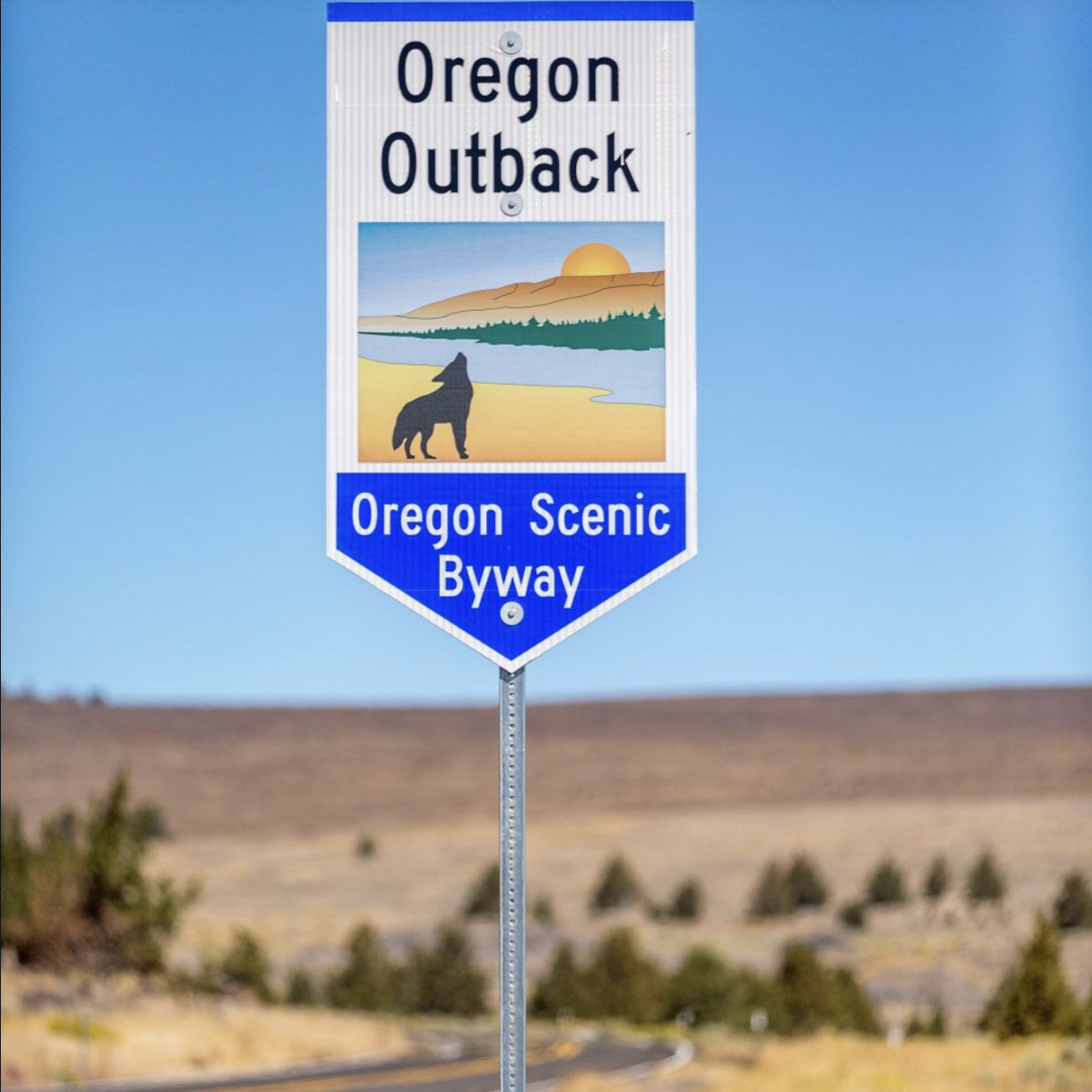
Photo courtesy of Oregon Outback Dark Sky Sanctuary
The region's darkness isn't accidental. Lake County covers 8,300 square miles with fewer than 8,000 residents. Its population density is less than one person per square mile. The communities within the sanctuary, like Adel, Plush, and Summer Lake, are tiny outposts scattered across vast basins, and the landscape between them is almost entirely public land managed by the Bureau of Land Management, the U.S. Forest Service, and the U.S. Fish & Wildlife Service. There simply aren't enough people or structures here to generate light pollution. The darkness is a byproduct of geography, and now it's being deliberately preserved.
A Coalition That Made It Happen
The Oregon Outback Dark Sky Sanctuary didn't emerge overnight. Formed in 2019, the Oregon Outback Dark Sky Network is a grassroots coalition that spent four years building the case for certification. They worked hand-in-hand with eight state and federal agencies, tribal nations, local ranchers, business owners, and conservation groups, developing a comprehensive lighting management plan to bring every artificial light source within the sanctuary into compliance with dark sky standards.
Dawn Nilson, a professional natural resources manager and Dark Sky Preservation Director for Rose City Astronomers, was one of the driving forces behind the effort. With support from Travel Oregon and Travel Southern Oregon, she managed the complex application process with DarkSky International. The Lake County Chamber of Commerce, the Lakeview Community Partnership, PLAYA at Summer Lake, and DarkSky Oregon all played critical roles. When the certification came through, it was the culmination of a community-wide commitment to something rare and irreplaceable.
And this is only the beginning. Phase 1 covers Lake County's 2.5 million acres. Phase 2 will expand the sanctuary to 11.4 million acres, incorporating portions of Harney and Malheur Counties to the east, which would make it more than triple the size of Death Valley National Park's dark sky designation.
What You'll Actually See
Descriptions of dark skies can sound abstract until you're standing under one. So here's what a clear night in the Oregon Outback actually looks like.
As the last light drains from the western sky, the first stars appear quickly, but within an hour, the sky has fundamentally changed. The Milky Way emerges not as a suggestion but as a structural presence, a broad luminous band arching overhead with enough detail to see individual dust lanes, star clusters, and the bright knot of the galactic core. On a moonless night, the sky seems to glow faintly on its own, not from any terrestrial source but from the sheer density of starlight above.
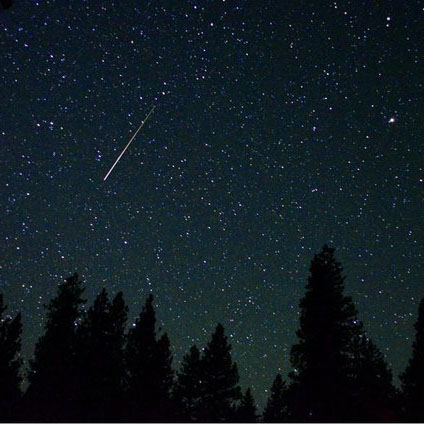
Photo courtesy of Oregon Outback Dark Sky Sanctuary
Venus, Jupiter, Saturn, and Mars appear as brilliant points bright enough to orient by. With even basic binoculars, you can resolve Saturn's rings, Jupiter's cloud bands and four Galilean moons, and the star clusters that pepper the Milky Way's plane. And the meteors, even outside peak shower seasons, you'll likely see more shooting stars on a casual night in the Outback than you would during the Perseids in a typical suburb.
For astrophotographers, the Outback is essentially a natural studio. Wide-field Milky Way shots that require stacked long exposures in most locations can be achieved in single frames here. The lack of light domes on any horizon means uninterrupted panoramic shots in every direction.
More Than Stars: Why Lake County Is Worth the Trip
The dark sky sanctuary is a reason to come. But Lake County is the reason to stay.
The landscape itself is staggering. Abert Rim, one of the highest fault scarps in North America, rises 2,490 feet above Lake Abert in a single vertical wall of basalt, running for over 30 miles. The Warner Mountains form a rugged spine along the county's eastern edge, with peaks above 8,000 feet. And between the ranges, broad alkaline basins stretch to the horizon, covered in sagebrush and bunchgrass, punctuated by seasonal lakes that flash silver in the afternoon light.
Hart Mountain National Antelope Refuge protects 422 square miles of this terrain, sheltering over 300 wildlife species. Pronghorn antelope, the fastest land animal in North America, roam the flats in herds visible from miles away. Bighorn sheep navigate the cliff faces. Golden eagles ride thermals above the rimrock. And at the refuge's campground, a natural hot spring sits open to the sky, free to anyone willing to make the drive, where you can soak under those Bortle 1 skies and watch satellites trace silent arcs overhead.
Summer Lake Hot Springs offers a different kind of experience: natural artesian water at 123 degrees feeding a century-old bathhouse and outdoor stone soaking tubs, with RV and tent camping steps away. It's the kind of place where one night turns into three.
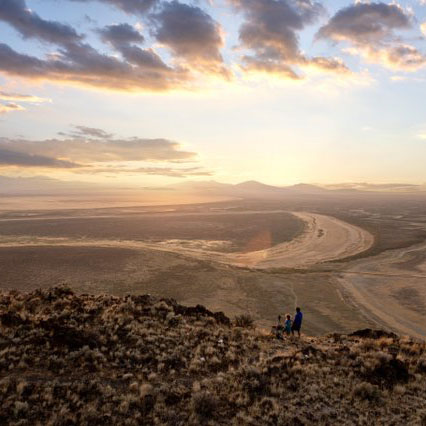
Photo courtesy of Oregon Outback Dark Sky Sanctuary
The small communities scattered through the county each have their own character. Lakeview, the county seat and self-proclaimed Tallest Town in Oregon at 4,800 feet, serves as the gateway to the sanctuary. Paisley, population 106, sits in the Chewaucan Valley surrounded by working ranches that have operated for over a century. And the Summer Lake area, home to PLAYA, a renowned artist residency, has become a gathering point for dark sky celebrations and community star parties.
For birders, Summer Lake Wildlife Area hosts over 250 species. For hikers, the Fremont National Recreation Trail winds through ponderosa forests and along volcanic ridgelines. For anyone who has ever felt the pull of empty roads and wide horizons, Lake County delivers a silence and scale that most of the American West lost decades ago.
Planning Your Visit
The sanctuary is open year-round, but timing matters. The darkest viewing windows fall during or near the New Moon, when the moon stays below the horizon all night. Summer and early fall offer the clearest, driest conditions and the best views of the Milky Way's galactic core, but even winter skies are remarkable if you're prepared for cold temperatures at elevation.
A few practical notes for first-time visitors: fuel up before you leave Lakeview or whatever gateway town you're coming from, as gas stations are sparse inside the sanctuary. Cell service is limited to nonexistent in much of the area, so bring a physical map. Pack warm layers regardless of the season since high desert nights can drop 30 or 40 degrees from daytime highs. And bring a red-light flashlight instead of a white one; it preserves your night vision and reduces disturbance to nocturnal wildlife.
The Oregon Outback Dark Sky Sanctuary visitor guide and the Lake County Chamber of Commerce in Lakeview (126 North E Street) are excellent starting points for maps, viewing tips, and up-to-date event information. The sanctuary also hosts seasonal stargazing events, astronomy club meetups, and guided dark sky programs throughout the year.
A Place That Puts Things in Perspective
There's something that happens when you stand in a landscape this big, this quiet, under a sky this full of light. The scale shifts. The daily noise fades. And for a few hours, you remember that the planet you're standing on is a small rock hurtling through an unimaginably vast cosmos, and that the evidence of that vastness is right there above you, free for anyone willing to look up.
Lake County has always had this sky. What's changed is that the rest of the world is starting to realize it. National Geographic, Outside Magazine, Smithsonian, AFAR, OPB, and the Dirty Freehub have all featured the sanctuary since its designation. Travel Oregon has highlighted it as a case study in dark sky tourism. And every year, more visitors are discovering that this remote corner of Oregon offers something increasingly rare: an unobstructed view of the universe.
The Oregon Tour de Outback's century ride route passes directly through the heart of the Dark Sky Sanctuary, giving riders an up-close experience of the same vast, untouched landscape that makes this region so extraordinary after dark. It's one more reason this corner of Oregon stays with you long after you leave.
Experience It for Yourself
Learn more about the Oregon Outback International Dark Sky Sanctuary at oregonoutbackdarkskysanctuary.com and start planning your visit to Lake County.
Plan Your Visit